Introduction
Load Balancer is a device or software used to distribute network or application traffic evenly across multiple servers or other resources. The main goal of a load balancer is to ensure that no single server is overwhelmed, thereby improving the performance, reliability, and scalability of the system.
Elastic Load Balancing is an AWS Load Balancing service that ensures requests are balanced between targets.
Key features include:
- High Availability
- Scalability: theoretically unlimited
- High Security: When combined with other services like WAF, Security Group. ELB can easily integrate with various backends using EC2, Container, Lambda.
Basic components of Load Balancer
- Target Group: A group of servers managed by the load balancer to distribute traffic.
- Listener: Defines how the load balancer receives incoming traffic and routes it to target groups.
- Rule: Defines how the load balancer routes traffic to target groups.
- Health Check: Checks the status of servers in the target group.
How does Load Balancer work?
By default, the Load Balancer distributes requests from clients to targets in a Target Group in a balanced manner (round robin), even if the target is in more than one target group.
Example:
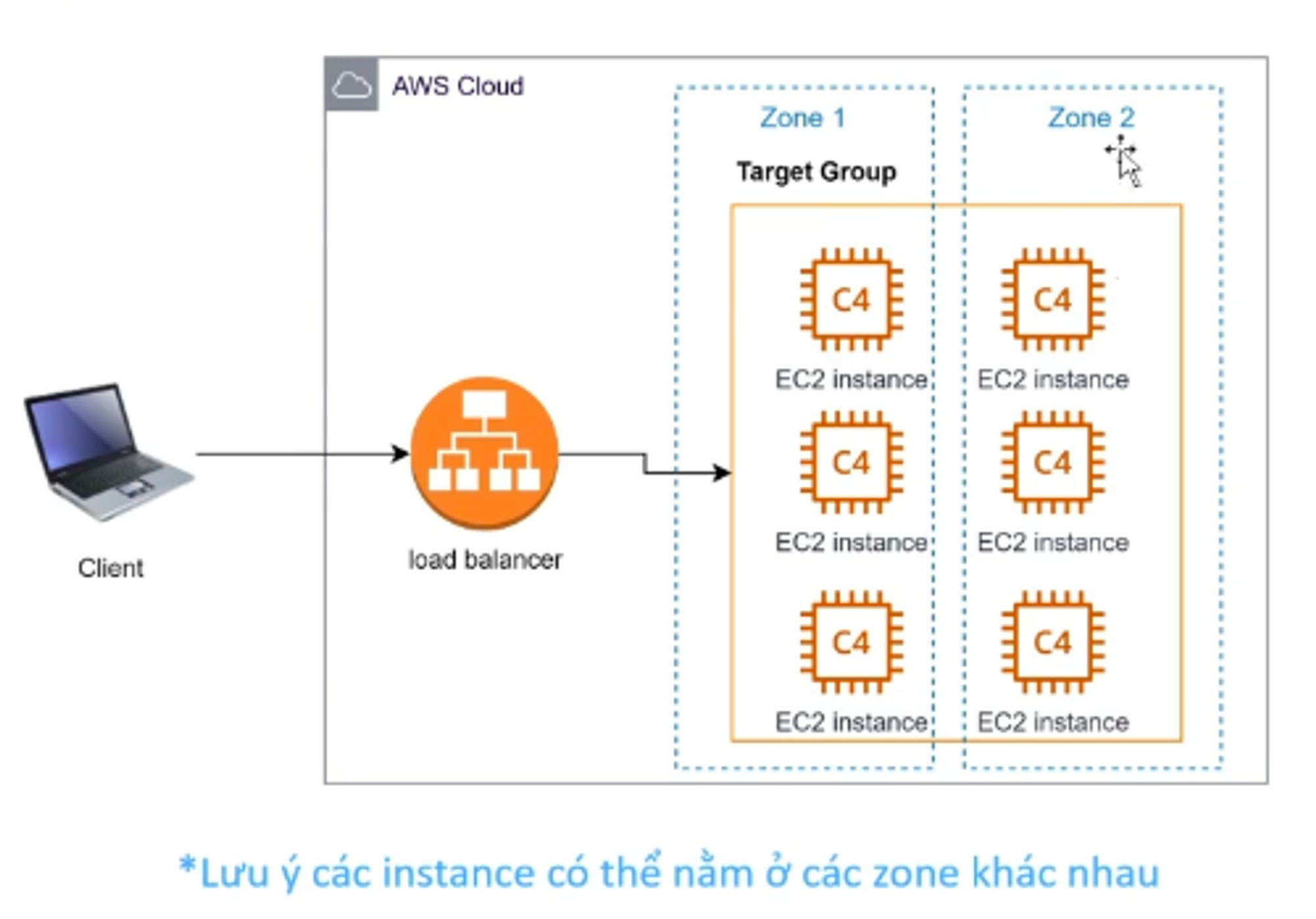
In the above image, each instance will receive ~16.7% of the requests from clients.
The Load Balancer can route to more than one target. In the case of multi-target, the routing to a target is determined by several rules:
- Listener port (the port requested by the user will be routed to the corresponding target group)
- Path pattern (Application LB only)
- Fixed ratio. For example, Target Group 01 receives 20%, Target Group 02 receives 80% of the traffic (in scenarios where we want to release a new feature to 20% of users to gather feedback).